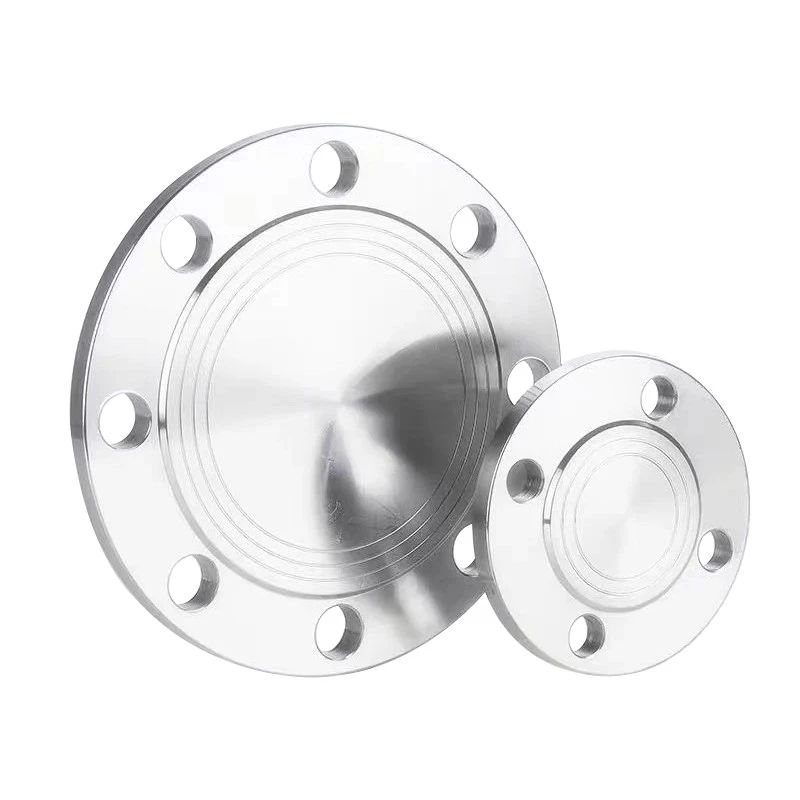
Choosing the right Blind Flange requires more than matching its nominal size. ASME B16.5, ASME B16.47, and EN 1092-1 define different dimensional systems, pressure designations, bolt patterns, and marking requirements. In this article, we explain how these standards affect flange selection, material compatibility, sealing faces, and pipeline installation, drawing on our stainless steel flange manufacturing experience at SN Valve.
When selecting a Blind Flange for an industrial pipeline, we first look at the engineering standard specified in the project documents. ASME and EN are two widely used standards, but they do not use the same dimensional and pressure designation systems. A flange with the same nominal pipe size may have different outside diameters, bolt hole arrangements, thicknesses, and pressure ratings depending on the standard.
ASME standards are commonly specified in projects using NPS dimensions and pressure classes such as Class 150, 300, and 600. European projects often use EN 1092-1, which identifies flange dimensions through DN sizes and PN pressure designations such as PN 10, PN 16, PN 25, and PN 40.
For us at SN Valve, identifying the applicable standard at the beginning of production is essential. It helps prevent dimensional mismatches during installation and ensures that the selected flange is compatible with the existing pipeline connection.
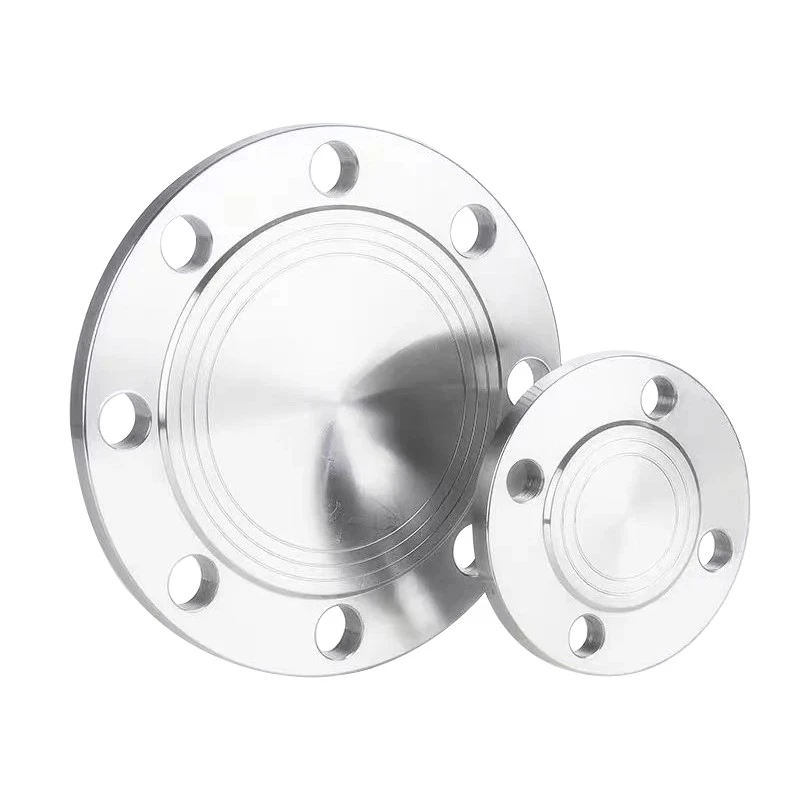
ASME B16.5 covers pipe flanges and flanged fittings from NPS 1/2 through NPS 24. It includes pressure-temperature ratings, materials, dimensions, tolerances, marking, and testing requirements. Blind flanges made from cast, forged, or plate materials are also covered.
For example, common ASME B16.5 pressure classes include:
One point worth emphasizing is that a higher Class number does not represent one fixed pressure value in every operating condition. The allowable pressure depends on the material group and operating temperature. We therefore recommend checking the pressure-temperature rating table rather than selecting a Blind Flange based on the Class designation alone.
When the nominal size exceeds NPS 24, ASME B16.47 becomes an important reference. It covers large-diameter steel flanges from NPS 26 through NPS 60, including Blind Flanges. Its pressure classes include Class 75, 150, 300, 400, 600, and 900.
Another important detail is the distinction between Series A and Series B. These two series have different dimensional arrangements, including bolt circle diameters and bolt hole configurations. They should not be treated as interchangeable simply because they share the same nominal size and pressure class.
For large-diameter pipeline projects, we recommend confirming the series, flange thickness, bolt pattern, and mating flange details before manufacturing. A mismatch in any of these dimensions can create installation problems even when the material and nominal size are correct.
EN 1092-1 is the European standard for circular steel flanges and their joints. It uses DN for nominal size and PN for pressure designation. Common PN levels include PN 6, PN 10, PN 16, PN 25, PN 40, PN 63, and PN 100.
Compared with the ASME system, EN 1092-1 uses different dimensional tables and flange type designations. For a Blind Flange order, we need to verify the required DN, PN, material grade, flange type, facing, and relevant dimensional requirements.
For example, a DN 100 PN 16 Blind Flange must follow the specified EN dimensional arrangement. It should not be assumed to match an NPS 4 Class 150 flange just because the nominal pipe sizes appear similar. Their bolt patterns, dimensions, and pressure-temperature requirements must be checked against the respective standards.
Material identification and traceability are also important in European projects. Depending on the project requirements, markings may include the manufacturer, standard number, flange type, DN, PN, material designation, and heat identification. These details help with incoming inspection and material verification.
The following table summarizes the main differences we consider when reviewing flange specifications.
| Selection Factor | ASME Standards | EN 1092-1 |
|---|---|---|
| Nominal Size | NPS, such as NPS 4 and NPS 12 | DN, such as DN 100 and DN 300 |
| Pressure Designation | Class 150, 300, 600, 900, 1500, etc. | PN 6, 10, 16, 25, 40, 63, 100 |
| Main Standards | ASME B16.5 and ASME B16.47 | EN 1092-1 |
| Dimensional System | ASME-specific flange dimensions and drilling | EN-specific DN and PN dimensional tables |
| Large-Diameter Coverage | B16.47 covers NPS 26–60 | According to the applicable EN 1092-1 size range |
| Material Requirements | Specified material groups and applicable specifications | Specified European material designations and requirements |
| Marking | Standard and applicable identification requirements | Includes relevant DN, PN, type, material, and traceability information |
These standards provide separate systems for flange design and manufacturing. There is no universal one-to-one conversion between ASME Class and EN PN. For instance, Class 150 should not automatically be treated as equivalent to PN 16. Actual compatibility depends on the pressure-temperature rating, dimensions, material, and project specification.
Start with the exact standard listed in the technical drawing or purchase specification. Check whether the project requires ASME B16.5, ASME B16.47 Series A or Series B, or EN 1092-1. The specified edition should also be confirmed, especially for projects with strict inspection requirements.
Consider both design pressure and operating temperature. The pressure rating of a stainless steel Blind Flange can vary with its material group and temperature. A Class or PN designation alone is not sufficient to establish the allowable operating pressure.
Material selection depends on the pipeline medium, temperature, corrosion exposure, and mechanical requirements. Common stainless steel options include 304 and 316/316L, while special alloy materials may be required for more demanding environments.
For example, 316L may be considered where improved resistance to certain chloride-containing environments is needed compared with 304. However, it is not suitable for every chloride concentration or temperature. We recommend evaluating the actual process medium before confirming the grade.
Blind Flanges are commonly specified with Raised Face (RF) or Flat Face (FF) sealing surfaces. The selected facing must match the mating flange and gasket arrangement.
Gasket type, dimensions, surface finish, and bolting should be checked together. Choosing the correct facing without considering the complete joint assembly can still lead to leakage problems.
Before production, verify the outside diameter, thickness, bolt circle diameter, number of bolt holes, hole diameter, and facing dimensions. For special material or project-specific orders, also confirm material certificates, heat number traceability, inspection requirements, and marking details.
In practical projects, the applicable standard is usually determined by the pipeline design and the equipment already installed. The following examples illustrate how we approach the selection.
| Project Scenario | Standard to Consider | Important Checks |
|---|---|---|
| General industrial pipeline, NPS 1/2–24 | ASME B16.5 | Class, material group, facing, and bolt pattern |
| Large-diameter pipeline, NPS 26–60 | ASME B16.47 | Series A or B, thickness, and bolt arrangement |
| European process piping | EN 1092-1 | DN, PN, flange type, material, and facing |
| Corrosive process media | Project-specified ASME or EN standard | Stainless steel grade and corrosion compatibility |
| Pipeline maintenance and temporary isolation | Existing pipeline standard | Connection compatibility and isolation procedure |
One practical point: a Blind Flange is often installed at the end of a pipeline, but it may also be used to isolate equipment or a branch connection during maintenance. In these cases, the flange must be selected for the actual design conditions. If it is used as a pressure boundary, the design pressure, temperature, material, and applicable safety procedures must all be considered.
Since 2004, SN Valve has focused on manufacturing stainless steel and special-material flanges, non-standard flanges, pipe fittings, sight glasses, and manholes. We integrate research and development, manufacturing, sales, and service, allowing us to work with different flange specifications and project requirements.
Our manufacturing capabilities cover standard and non-standard flange requirements. For Blind Flange projects, we pay particular attention to the applicable standard, material grade, pressure designation, machining dimensions, and sealing surface. These details are important when a flange must connect accurately with an existing piping system.
SN Valve holds the National Special Equipment Manufacturing License (TS2733F25-2027), ISO 9001 certification, and CE certification. These qualifications support our manufacturing and quality management processes.
When discussing a Blind Flange order with our team, we recommend providing the following information:
With these details, we can review the technical requirements before production and reduce the risk of dimensional or material discrepancies. For standard or customized stainless steel flanges, you can also explore our industrial pipe fittings and other flange-related products.
The main difference is their dimensional and pressure designation systems. ASME uses NPS sizes and Class ratings, while EN 1092-1 uses DN sizes and PN designations. Their flange dimensions and bolt patterns are not automatically interchangeable.
Not automatically. Although these designations may appear in similar pressure service applications, their pressure-temperature ratings and flange dimensions are defined differently. Always check the applicable standard tables, material group, temperature, and connection dimensions.
For ASME projects involving NPS 26 through NPS 60, ASME B16.47 is the relevant large-diameter flange standard. You must also specify Series A or Series B because their dimensional arrangements differ.
Not by relying on nominal size or pressure designation alone. The outside diameter, bolt circle, bolt hole count, hole diameter, thickness, and sealing face must all be checked. A specially engineered transition arrangement may be needed if the two systems must connect.
304 and 316/316L are common stainless steel options, but the correct choice depends on the process medium, chloride exposure, temperature, and required mechanical properties. For aggressive service conditions, a special alloy may be more appropriate after material compatibility evaluation.
We normally need the applicable standard, size, pressure class or PN rating, material grade, facing type, quantity, and technical drawing if available. Additional requirements such as heat number traceability, inspection, and material certificates should also be specified before production.