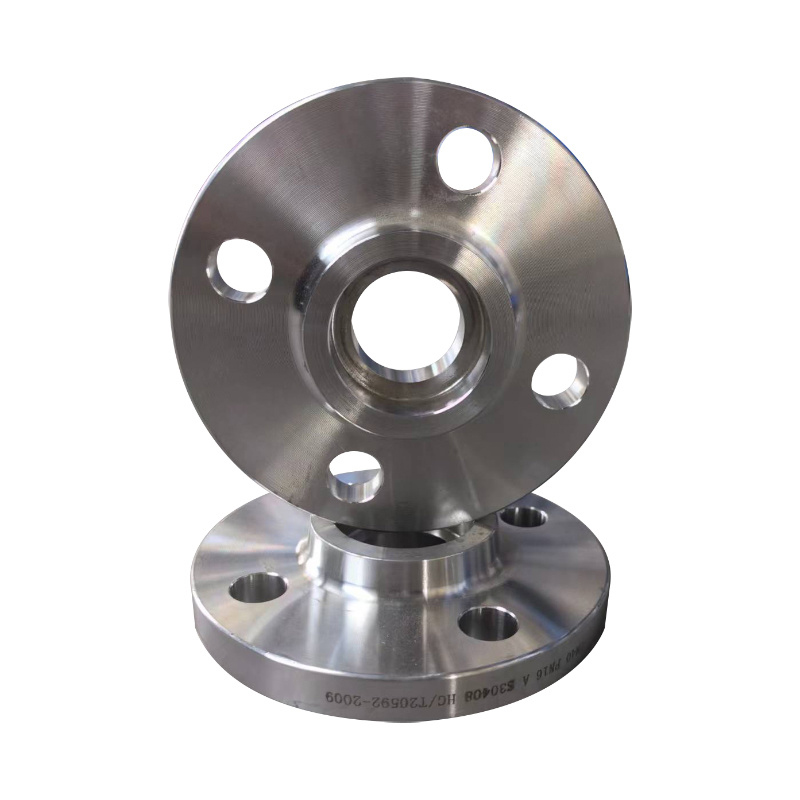
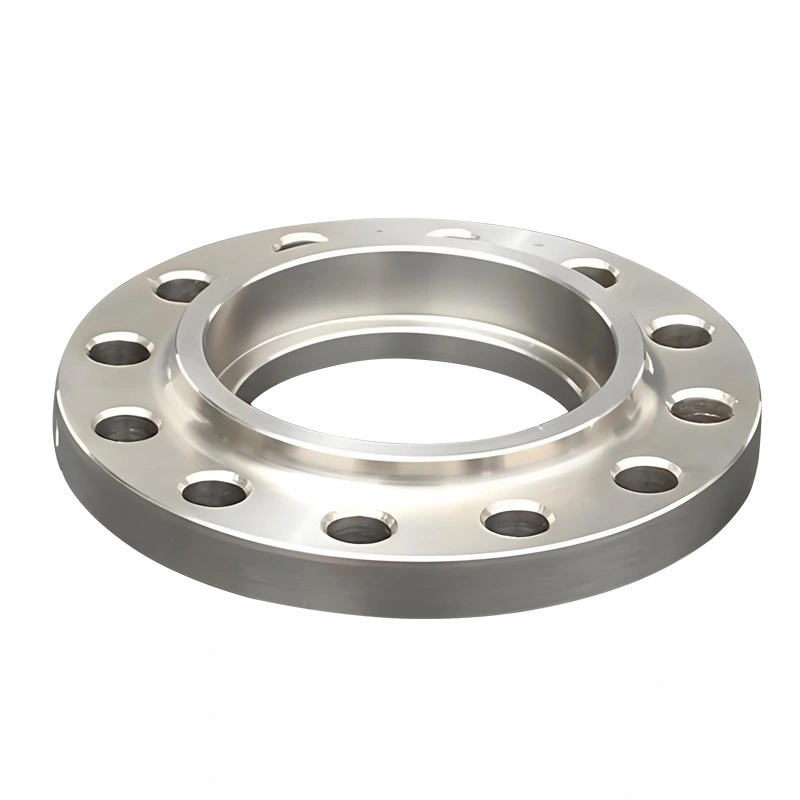
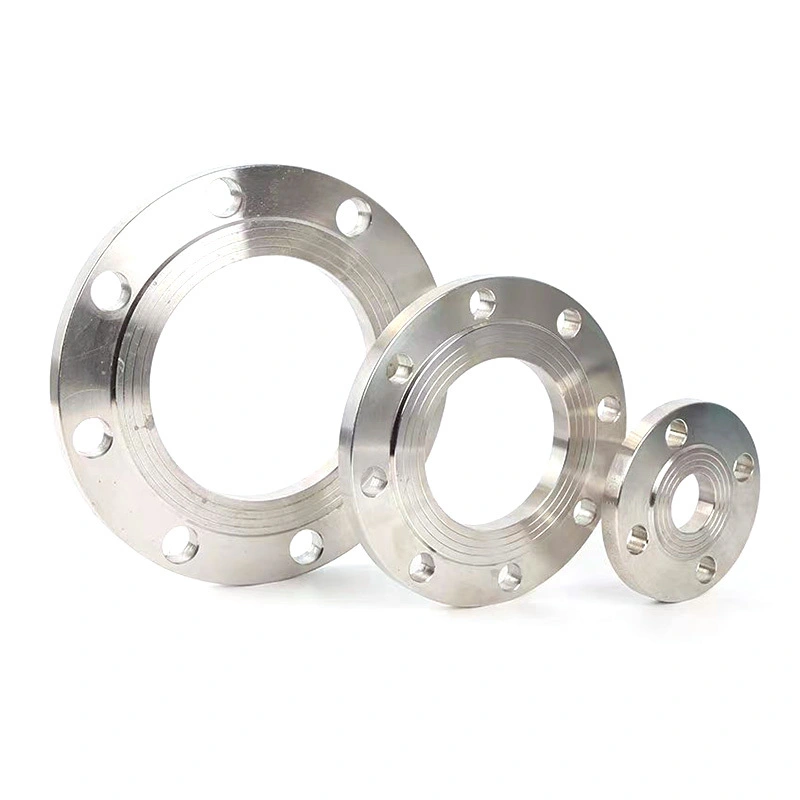
The fundamental advantage that separates stainless steel fittings from carbon steel alternatives lies in the passive chromium oxide film formed naturally on metal surfaces after exposure to oxygen. This thin, dense film blocks direct contact between the metal matrix and external moisture, salt mist or weak chemical liquids, effectively stopping rust spread even in continuously humid environments. stainless steel floor flange adopts austenitic stainless steel as primary raw material, which maintains stable mechanical performance at both low and normal ambient temperatures without brittle fracture risks common to low-grade ferritic steel fittings.
Two mainstream material grades dominate manufacturing for this floor fitting: 304 and 316 stainless steel. Each grade carries unique element ratios that define its suitable working environments. Grade 304 contains balanced nickel and chromium content to resist daily humidity, rainwater and indoor cleaning agents, making it ideal for residential railings, indoor drainage pipes and general commercial building piping. Grade 316 adds molybdenum alloy elements to its chemical composition, delivering superior resistance against chloride ions such as seawater, salt spray and diluted industrial acid liquids, which is mandatory for coastal construction, marine facilities and chemical workshop pipeline support points.
Floor flanges bear continuous vertical load from tubular posts plus lateral impact force generated by human leaning, equipment vibration or wind pressure for outdoor railings. All qualified stainless steel raw materials pass standardized tensile and yield strength testing before forging and CNC machining. Thickened base plate designs disperse concentrated pressure evenly across floor substrates, preventing local indentation or cracking on concrete and metal mounting surfaces. Unlike thin stamped iron bases that deform under repeated impact, forged stainless steel blanks maintain flatness and bolt hole alignment after years of heavy-duty usage.
Round floor flange plates feature symmetrical circular outlines with evenly distributed pre-drilled bolt holes around the central tubular hub. This symmetrical layout distributes fastening force uniformly around vertical round pipes, eliminating uneven stress concentration at single bolt positions. The circular outer contour also avoids sharp corner collision risks in pedestrian zones such as stair landings, balcony decks and walkway railings. Threaded round variants include internal NPT thread inside the central hub for direct connection of small-diameter fluid conveying pipes without additional welding procedures.
Square base floor flanges carry four corner bolt holes for maximum fixing stability on large-diameter square tubular rail posts. The neat geometric outline matches modern light luxury and minimalist architectural aesthetics, widely selected for high-end residential balcony railings, hotel lobby partition posts and commercial mall handrail systems. Square base plates cover larger contact areas with floor surfaces, significantly improving anti-tilting performance for tall vertical posts exposed to strong outdoor wind loads.
Welded hub floor flanges integrate the central pipe sleeve and base plate through full penetration welding then post-weld stress relief treatment, creating an inseparable high-strength connection suitable for heavy-load industrial pipeline support. Threaded hub types adopt internal precision machining for pipe thread matching, allowing quick disassembly and replacement of vertical pipes without cutting welding joints, more suitable for frequently adjusted temporary equipment pipelines and light decorative railing systems.
| Flange Shape Type | Core Structural Advantage | Primary Applicable Scenarios |
|---|---|---|
| Round Base Flange | Symmetrical stress distribution, no sharp collision edges | Circular handrails, small-bore fluid pipeline anchoring |
| Square Base Flange | Large contact area, superior anti-tilting wind resistance | Square tube railings, high-rise balcony outdoor posts |
| Threaded Hub Flange | Rapid disassembly without welding cutting | Temporary equipment pipes, light indoor decorative posts |
| Welded Hub Flange | Integrated high load-bearing welded joint | Industrial heavy pipeline, factory fixed support posts |
Before fixing any floor flange onto floor substrates, full surface cleaning is mandatory to remove dust, cement residue, oil stains and loose concrete fragments. Uneven floor surfaces must be leveled with filling mortar or metal gaskets; incomplete flat contact between flange base and substrate will create hidden loosening risks after long-term vibration. All matching bolts, expansion anchors and sealing gaskets should be inspected to confirm identical stainless steel material grade with the flange body, avoiding galvanized iron fasteners that generate galvanic corrosion contact with stainless steel base plates.
Measure vertical pipe outer diameter or thread specification to match the central hub size of the selected flange model. Mismatched hub and pipe dimensions will lead to unstable assembly, causing lateral sway of vertical posts after installation. Confirm bolt hole spacing on the flange base plate aligns with pre-marked drilling positions on the floor to prevent repeated re-drilling that weakens substrate structural integrity.
For multi-hole flange base plates, cross symmetrical bolt tightening sequence must be followed instead of sequential one-by-one fastening along a single side. Cross tightening balances compressive force evenly across the entire base plate, preventing warping of thin stainless steel base sheets and incomplete gasket sealing. Moderate torque force is required for each bolt; over-tightening will deform the flange plate while insufficient torque results in slow loosening under continuous vibration.
After all bolts reach standard torque values, perform manual lateral push testing on the vertical pipe connected to the flange to check for obvious sway gaps. Minor loose gaps indicate uneven gasket placement or inconsistent bolt tightness and require secondary re-tightening adjustment before completing full installation.
Modern residential and commercial architectural projects extensively deploy floor flanges as base fixing components for balcony railings, staircase handrails, terrace guard posts and indoor partition tubular frames. stainless steel floor flange replaces traditional cast iron bases that suffer rapid rusting and surface peeling after short-term outdoor exposure. The smooth polished or matte satin surface maintains consistent decorative coordination with glass balustrades, wooden handrails and metal facade systems without additional painting or surface touch-up work during later maintenance cycles.
High-end commercial venues including shopping malls, hotel lobbies and office buildings select square stainless steel floor flanges for their neat geometric appearance that fits minimalist and light luxury interior design languages. Indoor drainage small-bore pipelines also adopt threaded round floor flanges to fix vertical standpipes onto basement concrete floors, forming stable support points that absorb pipeline water flow vibration and reduce pipe wall noise transmission to building floor slabs.
Manufacturing workshops, coastal marine platforms and light chemical processing facilities demand flanges with strong anti-corrosion performance, generally specifying 316 molybdenum stainless steel grade. Workshop equipment support pipes, seawater circulation pipeline vertical stands and outdoor safety guardrails all rely on thickened stainless steel floor flanges to resist workshop chemical mist, coastal salt spray and regular equipment vibration. The sealed base contact surface prevents corrosive liquid seepage between flange plate and floor substrate, avoiding hidden corrosion damage underneath the base plate that cannot be easily observed from the exterior.
Food and pharmaceutical production workshops utilize electropolished stainless steel floor flanges with ultra-smooth pore-free surfaces that comply with hygiene cleaning standards. Residual production liquid and cleaning disinfectant can be fully wiped away without leaving trapped dirt that breeds microorganisms, meeting strict sanitary control requirements for food contact production environments.
Even premium stainless steel alloy materials require regular simple cleaning procedures to maintain intact passive film protection and extend overall service life. Dust, salt residue, industrial chemical splashes and hard water mineral deposits accumulated on flange surfaces will gradually wear down the chromium oxide layer if left untreated for months. stainless steel floor flange only needs low-frequency, low-complexity maintenance compared with carbon steel base fittings, with all cleaning steps compatible with common household and industrial neutral cleaning supplies.
For general indoor and dry outdoor installation environments, monthly wiping with soft microfiber cloth soaked in clean room-temperature water can remove accumulated dust and light handprint marks. Stubborn oil stains can be eliminated with diluted neutral dish detergent solution, followed by full clean water rinsing and dry cloth wiping to prevent residual detergent liquid from remaining on surface crevices. Never use steel wool, hard abrasive brushes or acidic descaling cleaners to scrub flange surfaces; hard abrasives create micro-scratches that break the passive protective film and become concentrated corrosion starting points.
Flanges deployed in coastal, chemical workshop or swimming pool surrounding environments require semi-annual passivation treatment to restore damaged chromium oxide film. Professional stainless steel passivation liquid can be evenly coated onto the entire base plate and hub surface, left to stand for specified reaction time then thoroughly rinsed with clean water and air-dried naturally. This treatment eliminates minor surface pitting risks and rebuilds uniform anti-corrosion film coverage without altering the original metal finish texture.
Standard size floor flanges can satisfy most conventional construction and industrial pipeline projects, yet large-scale engineering, special architectural design and customized equipment pipeline systems often demand adjusted base plate thickness, hub inner diameter, bolt hole spacing and overall outline dimensions. Off-the-shelf standardized products cannot fully match unique substrate space limitations or special load-bearing requirements of individual projects, which makes targeted customized manufacturing a reliable solution for complex engineering demands.
Zhejiang Shuangneng Steel Industry Co., Ltd. owns complete forging, CNC machining and surface finishing production lines dedicated to stainless steel floor fitting manufacturing, accumulating abundant technical experience supporting residential renovation contractors, commercial architectural design firms and industrial pipeline engineering teams. All production processes follow ASTM and domestic stainless steel mechanical property standards to guarantee consistent dimensional tolerance and anti-corrosion performance across customized batch production.
Adjustable specifications include base plate thickness, central hub pipe matching diameter, bolt hole quantity and spacing, overall square or round outline dimensions, and surface finish types (mirror polish, matte satin, electropolished sanitary finish). Custom material grade switching between 304 and 316 stainless steel is also available according to on-site corrosive environmental conditions submitted by project planners.
Complete dimension drawing files, material chemical composition test reports and mechanical load-bearing performance data sheets can be provided for every customized order to support engineering drawing review and on-site construction acceptance procedures. Physical test pieces are not available for delivery to all consulting parties.
Before submitting customized production demands, collect key on-site parameters including floor substrate material, maximum vertical and lateral load value, ambient humidity and chloride concentration level, reserved installation space size and matching pipe outer thread specification. Fully sorted project parameter information accelerates accurate custom scheme formulation and avoids secondary dimensional modification delays after production completion.
-