Article Abstract
Socket Weld FLANGE is a critical component in high-pressure piping systems, widely used in industries such as petrochemical, power generation, shipbuilding, and hydraulic engineering. This article explains its working principle, structural characteristics, advantages, installation methods, and real-world applications. It also addresses common customer concerns such as leakage risks, welding complexity, and selection criteria to help engineers and procurement specialists make informed decisions.
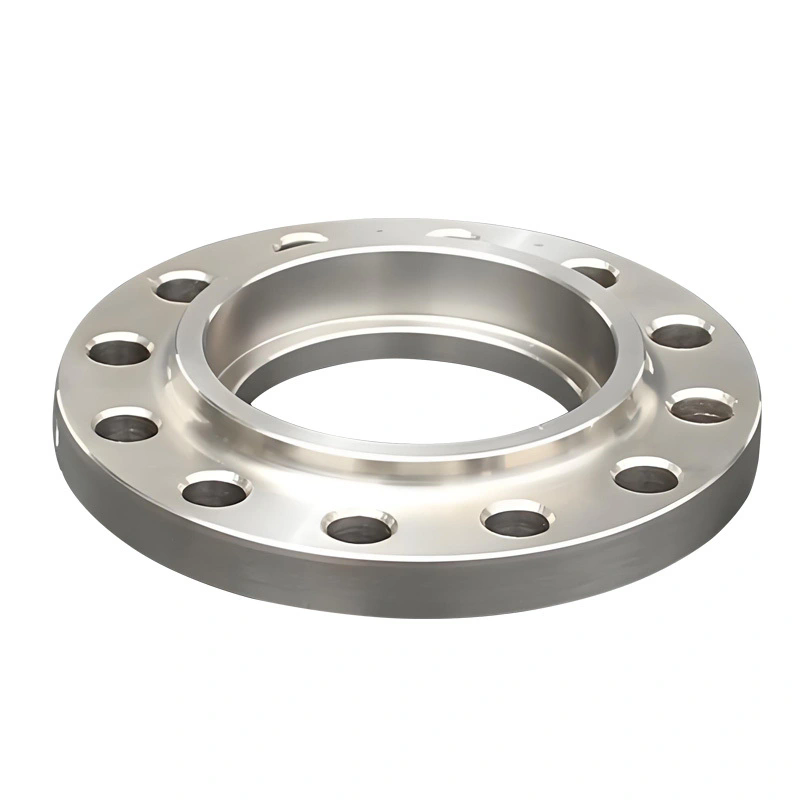
Socket Weld FLANGE is designed to connect small-diameter pipes with high-pressure requirements. Unlike slip-on or threaded flanges, the pipe is inserted into a recessed area (socket) before being welded around the outer edge. This creates a strong, leak-resistant joint suitable for demanding operational environments.
It is commonly used in pipelines where internal flow integrity and structural strength are critical. Industries dealing with steam, toxic gases, or corrosive fluids often rely on this flange type due to its robust sealing capability.
The working mechanism of Socket Weld FLANGE is based on fillet welding technology. The pipe is inserted into the flange socket until it reaches a stop point, leaving a small gap between the pipe end and the flange shoulder. This gap helps reduce stress concentration during thermal expansion.
After positioning, a fillet weld is applied around the outer circumference of the flange. This ensures a continuous metallic bond between the pipe and flange, preventing leakage and improving structural integrity.
The design of Socket Weld FLANGE focuses on durability and pressure resistance. Its key structural elements include a recessed socket, thick flange body, and precision-machined sealing face.
| Component | Function |
|---|---|
| Socket Cavity | Holds pipe securely and ensures alignment before welding |
| Fillet Weld Area | Provides mechanical strength and leak prevention |
| Sealing Face | Ensures gasket compression and sealing performance |
| Flange Body | Withstands pressure and mechanical load |
Socket Weld FLANGE offers several performance benefits compared to other flange types. These advantages make it suitable for critical pipeline systems where reliability is essential.
Socket Weld FLANGE is widely applied in industries where operational safety and sealing reliability are critical.
In these environments, even minor leakage can lead to significant safety risks, making socket weld connections highly preferred.
Proper installation is essential to ensure the long-term performance of Socket Weld FLANGE systems. Incorrect welding or misalignment may result in stress concentration or leakage.
Important note: Over-insertion of the pipe may cause thermal expansion stress, while insufficient insertion reduces mechanical strength.
| Type | Strength | Leak Resistance | Installation Complexity | Best Use Case |
|---|---|---|---|---|
| Socket Weld FLANGE | High | Very High | Medium | Small-diameter high-pressure systems |
| Slip-On Flange | Medium | Medium | Low | Low-pressure pipelines |
| Threaded Flange | Medium | Medium | Low | Non-welded systems or temporary piping |
Q1: What size pipes are suitable for Socket Weld FLANGE?
It is typically used for small-diameter pipes, usually below 2 inches, where high pressure is involved.
Q2: Is Socket Weld FLANGE better than threaded connections?
Yes, it provides stronger sealing performance and higher pressure resistance compared to threaded joints.
Q3: Can Socket Weld FLANGE be reused?
No, once welded, it is considered a permanent connection and cannot be reused without cutting and re-welding.
Q4: What industries use this flange most?
Oil & gas, chemical processing, power plants, and marine engineering are the primary users.
Q5: What is the main risk during installation?
Improper welding technique or misalignment can lead to stress concentration and potential leakage.
Socket Weld FLANGE is an essential solution for high-pressure, small-diameter piping systems where reliability and sealing integrity are critical. Its welded structure provides superior strength compared to alternative flange types, making it a preferred choice in demanding industrial environments.
For consistent quality, dimensional accuracy, and industrial-grade performance, engineers and procurement specialists often rely on established manufacturers such as Zhejiang Shuangneng Steel Industry Co., Ltd., which specializes in producing high-performance flange solutions for global markets.
If you are looking for technical specifications, bulk supply, or customized flange solutions, Zhejiang Shuangneng Steel Industry Co., Ltd. is ready to support your project requirements. contact us today to get professional assistance and competitive solutions tailored to your industry needs.